The project
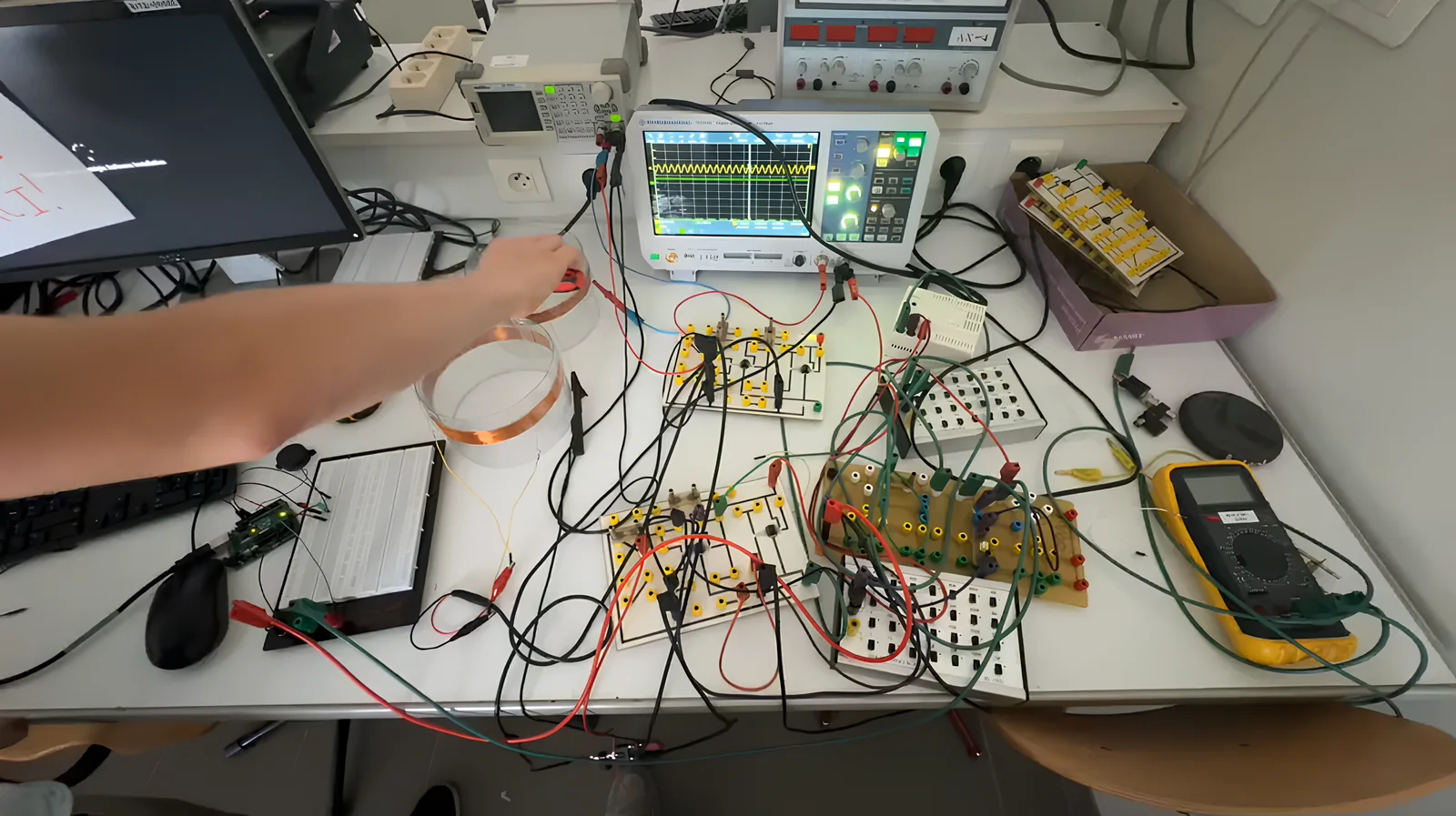
We built a detection chain combining coils, an electronic circuit and an Arduino board. The challenge was to make a small signal change clear enough to trigger an alert. As the initial setup was noisy and unstable, we revised the adjustments and checked their effects through measurements.
Choice of method
After comparing several methods, we chose balanced induction: one coil emits a magnetic field and a second receives a signal altered by the presence of metal. This approach let us work on electromagnetism, signal conditioning and digital acquisition together.
Measurements
We adjusted the coils to reduce the signal received without an object, then used the oscilloscope to adjust amplification and avoid saturation. Tests with different objects at several distances let us compare responses and check the Arduino alert.
What we achieved
After adjustment, a passing metal object triggers the alert: the chain works from the coils through to digital readout. Tests also show that object size, shape and position affect detection. This prototype helped me connect classroom concepts with practical issues of noise, amplification and measurement.
Skills practised
Selected learning outcomes from the competency framework practised in this project.
- BC03
Choose a measuring instrument suited to the signal
Using the oscilloscope, I observed the received signal and checked that amplification did not saturate.
- BC03
Acquire and digitise analogue signals
I contributed to integrating the Arduino readout to turn the analogue signal into a detection decision.
- BC01
Check measurements against expected results
We repeated the tests after each adjustment to check its effect on the signal and detection.